Which oil that bottle really is. Which gas stations meet the automakers' own detergent standard. Which "service" at the quick-lube is just profit. Mike Kessler spent forty years behind the counter watching good engines get the wrong oil, the wrong gas and the wrong bottle of "treatment." He finally wrote down what actually matters, and where you can check every word of it.
Yes, show me what my engine needsInstant download. Read tonight on any device. Large, clear type.

Does this sound like you?
The right oil costs about the same as the wrong one. The right gas costs pennies more a gallon. The difference between them is written on the label and on a list anybody can look up. Nobody at the counter ever showed you where.
It isn't that every shop is out to get you. It's that the oil aisle, the gas station and the quick-lube menu are all written by people selling something, and the one thing that would settle the question, the standard on the label, is printed in small type on the back where nobody looks. That's what this guide puts in your hands.
What this is
The Oil Secrets Guide is the plain-English manual for everything that goes into your engine: the oil, the gas, the coolant, the transmission and brake fluid, and the bottles on the shelf next to them. How to read any oil bottle in thirty seconds. Which store brands carry the exact same license as the famous names. Which gas stations meet the detergent standard the automakers created. Which "flushes" and additives are real, and which ones the government has already gone after.
And every chapter ends the same way: where this comes from. The American Petroleum Institute's license directory, the official TOP TIER list, the Federal Trade Commission's own case records, the automakers' service bulletins. You never have to take Mike's word for it.
"Walk into any parts store and you'll find a wall of oil that looks like a cereal aisle: bright colors, racing flags, words like 'advanced,' 'ultimate' and 'extreme.' Almost none of that tells you anything."
"What tells you something is printed small. A couple of symbols, a few letters and, on some bottles, a license number. Once you know where to look, you can judge any bottle in about ten seconds, and the cheap bottle with the right marks will beat the expensive bottle without them every time."
That's the whole book. Chapter after chapter: what the label says, what it really means, what it should cost, and where to check it. Read it in an evening, and use it every time you buy oil or gas for as long as you own a car.
🔒 Secure checkout. Instant email delivery.
Inside the guide
Built to be used, not studied. Go straight to the page you need: in the oil aisle, at the pump, at the quick-lube counter, or with the hood open in your driveway.
How to read the bottle: the API "donut," the starburst, the new API SQ standard, GM's dexos license number and the European approval codes. What 0W-20 actually means and why your manual's grade matters. What "synthetic" legally means in America. The store brands that carry the same license as the famous names, and the oils that ended up in class-action settlements. The filter. And how often you really need to change it.
The detergent standard the automakers created, and the AAA test that measured about 19 times fewer deposits for about 3 cents more a gallon. The official list of licensed gas brands. Why premium in a car built for regular is money out the window. E10, E15 and E85, and which ones can hurt a mower or an older car. Storing fuel. And the habits that stretch every tank, with the government's own numbers.
Coolant types that must never be mixed, and why the color on the jug won't tell you. The "lifetime" transmission fluid myth. Brake fluid that has to be changed by time, not miles. Power steering fluid in cars that don't have any. And how to read any leak by its color with a piece of cardboard and one night.
The engine treatments the Federal Trade Commission went after, by name and by year. What GM, Honda and Ford say about oil additives in writing. The few products that actually earn their place. And the flushes they'll try to sell you, with the one polite sentence that takes them off the ticket.
Plus, at the back, the printable pages: My Engine's Spec Card with your car's exact oil, filter and fluids, the Quick-Lube Script, and an oil change log that doubles as your warranty proof.
134-page PDF plus a Large Print edition. Instant download.
Everything you get today
One engine flush you don't buy pays for all of it several times over.
From the comments on our channel
Not reviews. These are real comments left under our videos by the drivers who watch them, quoted word for word. They know what we know: the engines that last are the ones that got the right oil, the right gas, and an owner who paid attention.
"I put 422,000 miles on my 1997 3.3 L Dodge Grand caravan. In the 22 years we owned it we drove to work, winter summer, across the country loaded heavy on trips. I never opened up the motor or the transmission. I serviced it myself regularly including brakes , tires etc. … My opinion is , oil is cheaper than parts- labor. lol"
"I have long known the advantages of Top Tier gas. In my cars, and I have 8 of them, 7 of which are 20+ years old, and somewhere between 100,000 and 200,000 miles. … I tell anyone who will listen to only use Top Tier gas. Yet many believe gas is gas."
"I live in FLORIDA and I have a 2006 Toyota tundra … I just hit 289,000 miles and just changed valve cover gaskets and everything was very clean."
"I generally try to use top tier gas, but don't always use it. I always put a bottle of Techron Fuel System Cleaner in the tank at every oil change, just to keep things clean. … I've got almost 300,000 miles on my '89 Toyota pickup and going strong."
"… when ever u do ur own maintenance and/or oil changes it forces u to look all around ur engine and the underside of ur vehicle where u just might c something in need of attention, further preventing future problems."
None of them did anything magic. They bought the right oil, the right gas, and they paid attention. This guide shows you exactly what "right" means, on the label, for your car.
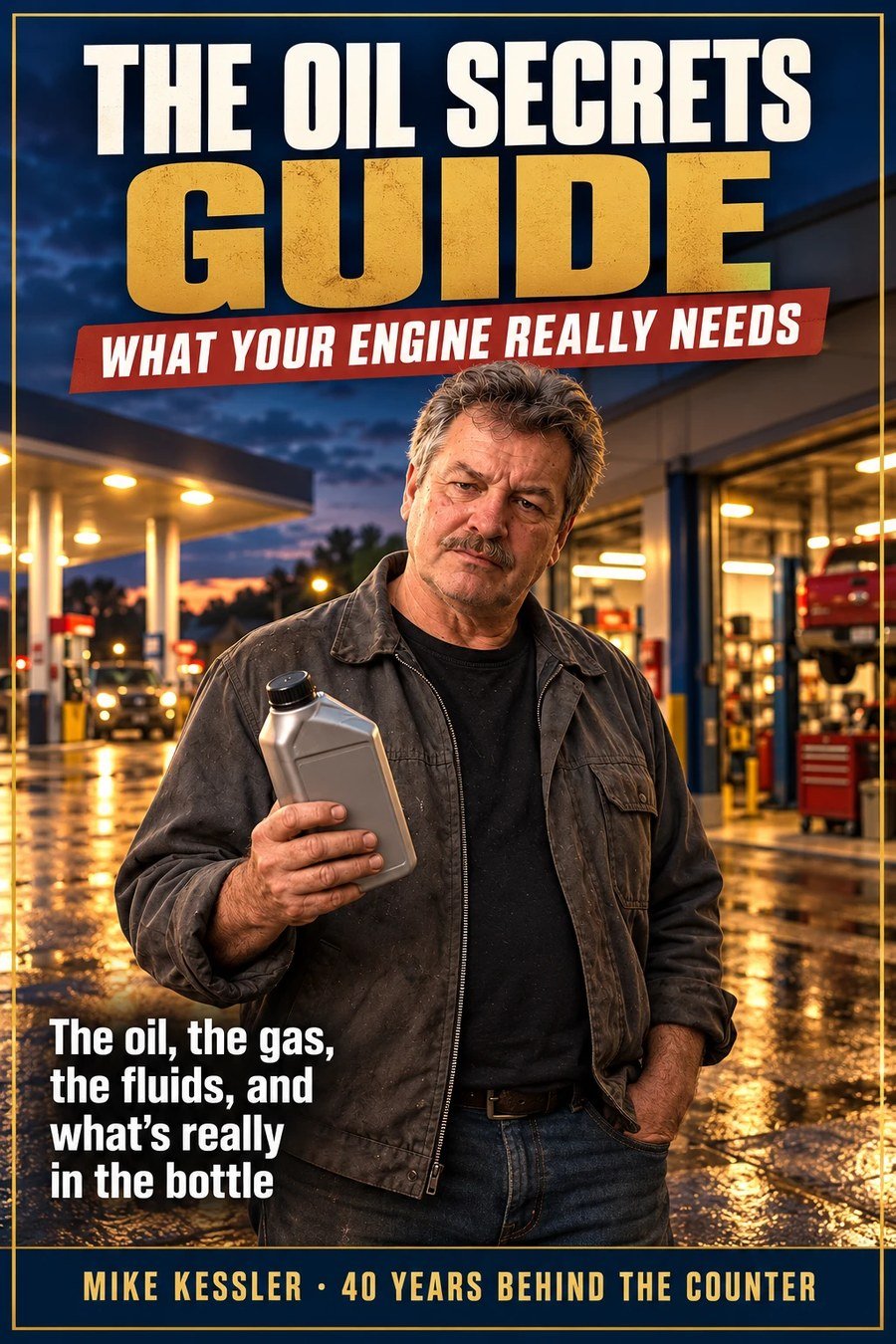
Meet Mike Kessler
Most of the engines I saw fail early didn't wear out. They cooked, or they ran low, or they ran on the wrong stuff for years because nobody ever told the owner what the label meant. Good people, careful people, doing their best with a shelf full of bottles that all say the same thing.
I started at fourteen, handing my uncle wrenches in a two-bay garage outside Chillicothe, Ohio. Eleven years inside a dealership service department. Then twenty-nine years running my own shop, where I answered the same questions across the counter every single week. Which oil? Is premium worth it? Do I need that flush? Is this bottle any good?
The answers were never secret. They're printed on every bottle and listed in public directories anybody can search. They just never made it to the people buying the oil. So I wrote them down, in plain words, with the source under every one.
Mike Kessler
Read Chapter 2. Walk out to your garage and read the back of the oil you're using right now, then check it against your owner's manual. If this guide hasn't already shown you something you didn't know about what's going into your engine, reply to your receipt email within 7 days and I'll refund every cent. No forms, no questions. You keep the guide and the printables either way.
Questions
One decision
The right oil, the right gas and the right fluids cost about the same as the wrong ones. The difference is knowing what to read and what to say. Read one chapter tonight, and the next time you're in the oil aisle, at the pump or at the quick-lube counter, you'll be the one who knows.
Less than one quick-lube "fuel service," for every oil change you'll ever buy.
By clicking, you agree to our Terms and Privacy Policy.
One last thing from Mike
It only cares what's actually in the bottle and the tank. Every bottle on that shelf says "advanced protection." One chapter tonight, and you'll know how to read the part that's true.
7-day refund if it isn't what you needed. You keep the guide.
Click here for instant access